
“We’ve driven past them before.”
That’s what a first responder in South Shore, Nova Scotia, said after a recent night call.
Not once. Not twice. Enough times that it stopped feeling like bad luck — and started feeling like a system failure.
“It happens every fall,” they say. “The fog rolls in off the water, the rain starts sideways, and suddenly you’re driving blind. You see the reflectors at the last second. Or worse — you don’t.”
One call still haunts them.
“It was a single-vehicle crash near Sherbrooke. We passed it. Radioed in clear. Ten minutes later, another unit found it — 200 meters back. A woman was sitting in the ditch, hypothermic. She’d been there over 40 minutes.”
No one was hurt. But the guilt lingered.
“We’re trained, equipped, alert,” says a senior responder. “But if you can’t see, you can’t help.”
The Hidden Dangers of Coastal Night Response
Nova Scotia’s coastline is stunning — but it’s also one of the most dangerous places in Canada for emergency response after dark.
- Coastal fog forms rapidly, especially in fall, reducing visibility to under 30 meters
- Rain-slicked roads reflect headlights, creating blinding glare
- Narrow, winding routes limit sightlines and escape options
- Disabled vehicles often have dead batteries — no lights, no signals
And with over 70% of rural roads unlit, crews are constantly operating in conditions where traditional tools fail.
“Flashing lights? They just bounce off the fog,” says a paramedic. “Spotlights? They make it worse. We’re not just fighting the weather — we’re fighting the illusion of control.”
A New Kind of Awareness
After the missed call, the unit began testing new tools for low-visibility navigation.
They tried handheld thermal scopes and drone support, but needed something integrated, continuous, and reliable.
Then they deployed a vehicle equipped with AI-powered detection technology.
“It wasn’t about brighter lights,” says a tech lead. “It was about seeing what the eye can’t — especially when movement stops.”
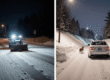
During a night trial, the system flagged a simulated crash scene 150 meters ahead, fully obscured by fog. The crew didn’t see it until 50 meters out.
“That’s 100 meters of reaction time we didn’t have before,” the responder says. “That’s a life saved.”
Business Impact: Faster, Safer, More Confident Response
Since integrating the system into two night units:
- Zero missed incidents in fog or rain over the past month
- Search time for roadside calls dropped by 33%
- Crew confidence in night navigation has increased significantly
Now, regional emergency planning teams are evaluating expansion to ambulance, fire, and SAR units operating in high-risk coastal zones.
“It’s not a luxury,” says a public safety coordinator. “It’s operational necessity. One vehicle with advanced detection can cover more ground, safer, with fewer errors.”
Why Nova Scotia Needs Smarter Vision
The Atlantic coast demands more than cones and caution:
- Sudden weather shifts catch crews off guard
- Wet, dark clothing blends into the night
- Stranded vehicles are often off the shoulder, invisible until impact
- Wildlife crossings increase in fall and winter
Advanced systems detect heat signatures, identifying people, animals, and vehicles up to 656 feet (200 meters) ahead, even in total darkness, fog, or heavy rain.
The Bottom Line: When the Weather Lies, Heat Tells the Truth
For Nova Scotia’s first responders — who serve communities from Yarmouth to Canso — safety isn’t just about training and equipment.
It’s about seeing what’s really there — not just what the lights suggest.
As one responder put it:
“We used to drive into the fog. Now, we see through it.”
Learn more about how AI-powered vision supports emergency services
Request a business consultation for public safety fleets