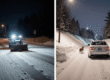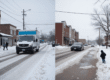

In New Brunswick, where rural roads stretch across dense forests and coastal fog rolls in without warning, utility and maintenance crews work around the clock to keep essential services running.
From repairing power lines after a storm in Saint John, to fixing water mains in Fredericton, or clearing roads during early winter in Miramichi, these workers face some of the most dangerous conditions in Canada — especially after dark.
And the risks are real.
According to WorkSafeNB, roadside workers in New Brunswick face a significantly increased risk of injury or fatality when working near traffic at night. In 2023 alone, there were over 40 reported near-misses involving utility vehicles on low-visibility highways.
Why? Because traditional visibility tools are failing them.
The Problem: Why Headlights and Reflective Vests Aren’t Enough
Most people assume that headlights, reflective vests, and warning signs are enough to keep roadside workers safe. But in real-world conditions, they fall short.
Here’s why:
- Fog and rain scatter light, reducing visibility to just meters
- Wet roads reflect headlights, creating glare and blinding drivers
- Dark clothing blends into shadows, making pedestrians invisible
- Fatigued or distracted drivers often don’t react in time
Even worse: human reaction time at 100 km/h is about 1.5 seconds — meaning a driver traveling at highway speed covers over 40 meters before they even begin to brake.
By then, it’s often too late.
New Brunswick’s Unique Challenges
New Brunswick’s geography and climate create a perfect storm for night work hazards:
- Coastal fog in areas like Campbellton and St. George reduces visibility suddenly
- Rainy fall months (September–November) increase road spray and glare
- Rural roads lack streetlights and have high wildlife activity
- Storm response work often happens during peak darkness and poor weather
This means utility crews are frequently working in conditions where they can’t see oncoming vehicles — and oncoming vehicles can’t see them.
The Solution: Thermal Imaging & AI-Powered Awareness
The future of roadside safety isn’t brighter lights — it’s smarter vision.
Enter Robofinity InsightDrive™, the first AI-powered thermal imaging system designed for vehicles. Unlike traditional headlights that rely on reflected light, InsightDrive™ detects heat signatures — allowing it to identify people, animals, and vehicles in total darkness, fog, or rain, up to 656 feet (200 meters) ahead.
This means:
- A power line technician can be seen by an approaching driver long before they enter headlight range
- A water crew working on a dark road can avoid a speeding vehicle that didn’t see the cones
- A snowplow operator can detect a stranded motorist before it’s too late
And because InsightDrive™ works independently of ambient light, it sees clearly through fog, smoke, and precipitation — conditions that blind most drivers.
✅ Real-World Impact
Municipal and utility fleets across Atlantic Canada are already seeing results:
- Reduced near-misses on fog-prone highways
- Improved driver confidence during night operations
- Fewer collisions during emergency response
Installation is compatible with most utility trucks, snowplows, and maintenance vehicles — and integrates seamlessly into daily operations.
The Bottom Line: Safety Isn’t Optional
For the men and women who keep New Brunswick’s lights on, water flowing, and roads clear, safety should never be a gamble.
As fall turns to winter and darkness comes earlier, the need for proactive, intelligent visibility has never been greater.
Learn more about how InsightDrive™ supports utility and maintenance operations
Contact us for fleet integration and pricing