It was Day 2 of the search.
A hunter had gone missing in the Abitibi-Témiscamingue region after failing to return from a weekend trip. Last seen near a remote logging road, he had no satellite beacon, and cell service was nonexistent.
By nightfall, temperatures dropped to -17°C with wind chill. Snow began to fall, erasing tracks and making aerial searches impossible.
The ground team pressed on.
“We knew hypothermia was setting in,” says a SAR coordinator. “At that temperature, survival time is measured in hours, not days.”
They searched through the night — slow, methodical, with limited visibility. Then, just before dawn, a detection alert sounded.
“He wasn’t moving,” the coordinator recalls. “He was lying flat, covered in snow. If we’d passed 50 meters north, we might never have found him.”
They reached him in time. He was conscious, severely hypothermic, but alive.
What made the difference wasn’t luck. It was the ability to detect life when light and sight failed.
❄️ The Reality of Boreal Search Missions
Northern Quebec’s wilderness is vast, remote, and unforgiving — especially in fall and early winter.
- Dense forest cover blocks aerial views and GPS signals
- Early snow and wind erase tracks within hours
- Long nights mean up to 16 hours of total darkness
- Hunters in camouflage blend into the terrain, invisible to the eye
And with no ambient lighting or road access, search teams are often operating blind — relying on instinct, experience, and whatever technology they can deploy.
“Drones fail in wind,” says a veteran searcher. “Thermal scopes are limited by range. We needed something mobile, continuous, and accurate.”
A New Kind of Detection
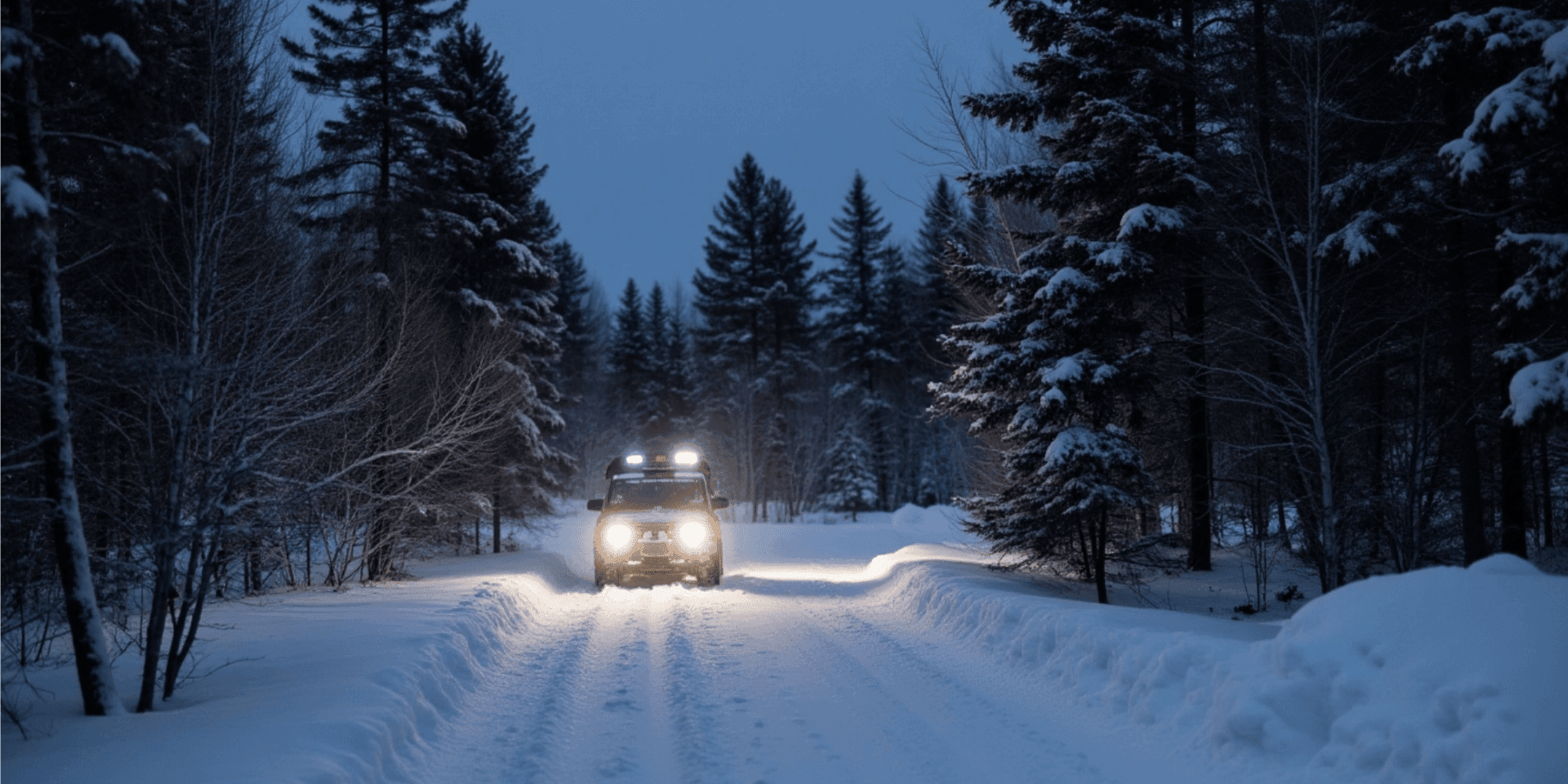
The breakthrough came when the team began using a vehicle equipped with AI-powered thermal detection.
Unlike handheld devices, this system scanned continuously, covering more ground with fewer personnel. More importantly, it used AI pattern recognition to distinguish human heat signatures from animals or environmental heat.
“It didn’t just show heat,” says a tech operator. “It showed a person — even when they weren’t moving.”
In this case, the system flagged the anomaly at 180 meters, despite snow cover and low body heat. That early warning gave the team time to adjust course and make contact.
Business Impact: Faster, Safer, More Effective Missions
Since integrating the technology:
- Search coverage has increased by 45% per shift
- False alarms have dropped due to AI filtering
- Rescue times have improved in zero-visibility conditions
Now, multiple SAR units across Northern Quebec and Eastern Ontario are evaluating similar systems for their fleets.
“It’s not replacing boots on the ground,” says a regional planner. “It’s extending their reach — safely, efficiently, and effectively.”
The Bottom Line: In the Wild, Heat Is the Only Signal That Matters
In the boreal forest, time, cold, and darkness are the enemies.
But with advanced detection, teams now have a new advantage: the ability to find people who can’t be seen.
As one rescuer put it:
“We don’t just look for movement. We look for signs of life in a frozen world. And now, we can find them.”
Learn more about how AI-powered vision supports search and rescue missions
Request a business consultation for emergency fleets